
⚡ Battery Lifespan Summary
Modern residential solar batteries typically last between 10 and 15+ years. The latest Lithium Iron Phosphate (LiFePO4) batteries are rated for 6,000 to 10,000 charge cycles. Most premium manufacturers provide 10-year manufacturer warranties guaranteeing at least 70% to 80% retained storage capacity.
What determines how long a solar battery lasts?
Unlike static solar panels (which have no moving parts and regularly last 25–30+ years), solar batteries are electrochemical storage devices. Over time, recurring chemical charging and discharging gradually diminishes their total capacity.
Five key factors influence how long your battery storage system will operate at peak performance:
1. Battery chemistry (LiFePO4 vs. NMC vs. Lead-Acid)
The chemical composition of your battery cells is the single biggest factor in overall longevity:
- Lithium Iron Phosphate (LiFePO4): The gold standard for home energy storage in the UK. Inherently non-flammable, exceptionally thermally stable, and capable of 6,000 to 10,000 cycles (15+ years of daily use). This is the primary chemistry installed by World Solar.
- Nickel Manganese Cobalt (NMC): Highly energy-dense (used in some compact wall units like early Tesla Powerwalls). Typically rated for 3,000 to 5,000 cycles (10 to 12 years).
- Lead-Acid (Legacy): Obsolete for modern homes. Heavy, toxic, and typically degrades within 3 to 5 years.
2. Depth of Discharge (DoD)
Depth of Discharge refers to how much of the battery's total capacity can be used before it stops discharging. While older lead-acid batteries could only be discharged by 50% without suffering damage, modern lithium batteries feature a 90% to 100% usable Depth of Discharge with minimal degradation.
3. Operating temperature and location
Extreme temperature fluctuations accelerate battery cell degradation. Solar batteries perform best when kept at a stable ambient temperature between 10°C and 25°C.
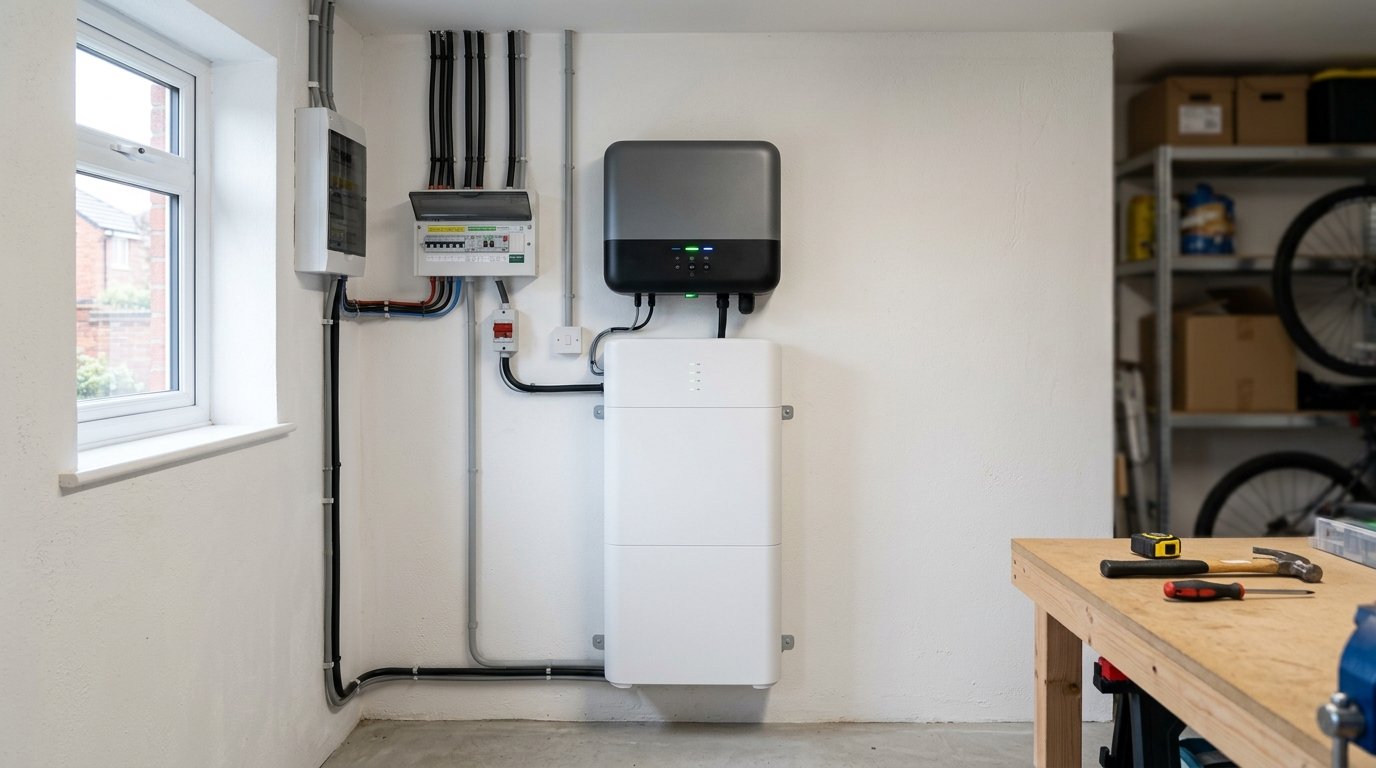
Installing your battery indoors—such as in a clean utility room, understairs cupboard, or insulated integral garage—ensures optimal operating temperatures and maximises lifespan compared to exposed outdoor walls.
Solar battery lifespan comparison by technology
| Battery Chemistry | Expected Lifespan | Cycle Life | Usable DoD | Typical Warranty |
|---|---|---|---|---|
| LiFePO4 (Lithium Iron Phosphate) | 12 – 15+ Years | 6,000 – 10,000 | 90% – 100% | 10 Years (70% capacity) |
| NMC (Lithium Nickel Cobalt) | 10 – 12 Years | 3,500 – 5,000 | 85% – 95% | 10 Years |
| Lead-Acid / AGM | 3 – 5 Years | 500 – 1,200 | 50% | 2 – 3 Years |
Signs your solar battery may be reaching the end of its life
- Reduced capacity retention: The battery charges quickly but drains noticeably faster in the evening than it used to.
- Inverter communication errors: Recurring BMS (Battery Management System) warnings or fault codes displayed on your smartphone app.
- Physical degradation: Any signs of casing swelling, overheating, or corrosion around terminals (requires immediate professional inspection).
How to extend the life of your solar battery
- Install in an insulated area: Protect your battery from sub-zero winter chills and direct summer heat.
- Keep firmware updated: Ensure your inverter and battery management system are connected to Wi-Fi for automatic manufacturer performance improvements.
- Choose high-quality LiFePO4: Investing in certified equipment like GivEnergy or Tesla ensures proven cell longevity and UK-based technical support.