
⚡ The Short Answer
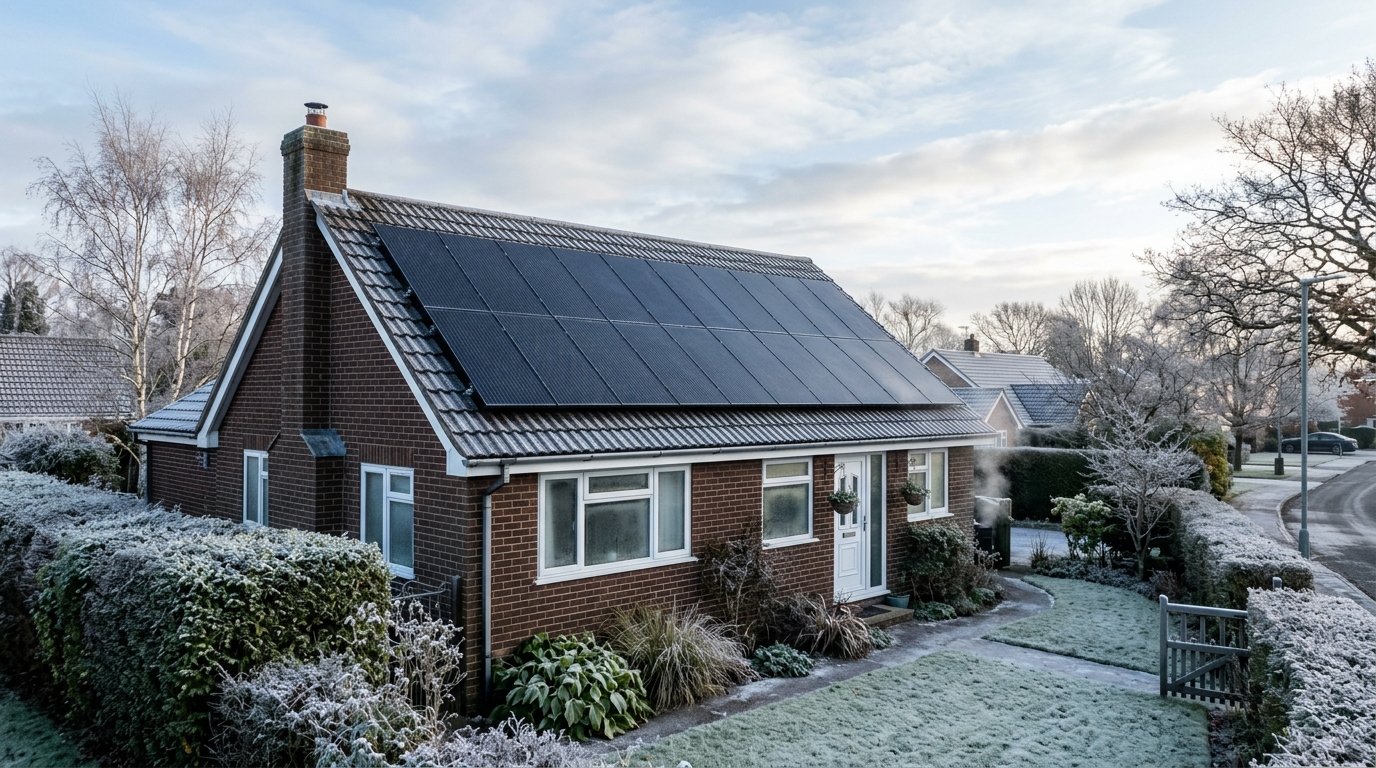
Yes, solar panels work in winter in the UK. Solar panels generate electricity from daylight (light photons), not heat or direct tropical sunshine. While shorter daylight hours and lower sun angles mean winter generation is lower than in summer, your panels will continue producing clean electricity throughout December, January, and February.
How solar panels produce electricity in cold weather
A common misconception is that solar panels need hot sunny weather to generate power. In reality, solar photovoltaic (PV) technology operates entirely on light radiation, not ambient temperature.
In fact, solar panels actually operate more efficiently in colder temperatures. Like all electrical conductors, photovoltaic silicon experiences less electrical resistance when cold, allowing electrons to flow more freely. A crisp, bright, freezing winter morning can produce exceptionally high peak output!
What affects solar generation during UK winter?
While solar panels function perfectly well in cold weather, total seasonal generation decreases due to three astronomical and meteorological factors:
- Shorter daylight hours: In mid-summer (June), the UK enjoys up to 16 hours of daylight. In mid-winter (December), daylight drops to around 8 hours. Fewer hours of light naturally results in less cumulative energy generated per day.
- Lower sun elevation: The winter sun sits lower in the sky, meaning sunlight passes through a thicker layer of atmosphere and hits roof panels at a shallower angle.
- Cloud cover and diffuse light: Overcast British winter skies filter sunlight into diffuse light. Modern monocrystalline panels can still capture diffuse daylight, producing roughly 20% to 40% of their peak summer output.
Typical UK seasonal solar generation distribution
| Season | Months | Approx. % of Annual Output | Household Impact |
|---|---|---|---|
| Spring | March – May | 30% | Strong ramp-up, cool days promote high efficiency |
| Summer | June – August | 45% | Peak output, long daylight, high export earnings |
| Autumn | September – November | 15% | Steady generation offsetting early lighting and heating |
| Winter | December – February | 10% | Supplements daytime power and baseline background load |
What happens when it snows on solar panels?
In most of the UK, heavy snowfall is rare. When snow does fall on pitched solar panels:
- The dark glass surface of the panels absorbs radiant heat, causing snow to melt and slide off rapidly.
- Panels are installed at an angle (usually 30°–35°), which naturally encourages snow to shed safely.
- Light reflects off surrounding snow (the albedo effect), sometimes increasing generation once the panel glass clears.
How to make the most of winter solar energy
- Pair with a home battery: In winter, you can program your battery to charge from the grid overnight on low off-peak tariffs (such as 7p/kWh) and power your home during expensive peak evening hours (30p+/kWh).
- Run appliances around midday: Set dishwashers, washing machines, or immersion heaters to run between 11:00am and 2:00pm when solar generation peaks.
- Smart inverter monitoring: Use your mobile app to track real-time daylight production and align usage.